


 (32) 232 19 65

Long-load trailer
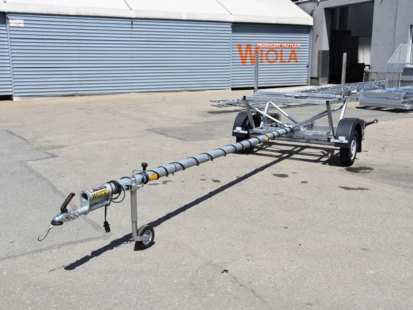
A long-load trailer is a specialised solution designed for the safe and convenient transport of materials of above-standard length. It is ideal for transporting steel sections, pipes, beams, timber, structural components, fencing and materials used in construction and industry. WIOLA’s range includes frame-type long-load trailers and stanchion-type models, which can be adapted to the type of load, its length and weight.
A long-load trailer is a good choice for construction firms, metalworking workshops, steel wholesalers, structural fabricators, sawmills, installation teams and companies that carry out their own transport operations. A well-designed structure facilitates the arrangement of the transported items, their loading and secure fastening whilst in transit. Depending on the model chosen, trailers are available with different numbers of axles, gross vehicle weight ratings and load compartment configurations. This allows you to choose either a lightweight model, often referred to as a long-load trailer, or a robust trailer for regular use.
A popular option is the 6-metre long-load trailer, designed for transporting typical sections, pipes and structural components. For longer or non-standard loads, a stanchion-type long-load trailer is ideal, as its design allows the trailer combination to be better adapted to the material being transported. Such a long-load trailer for steel can be used for both one-off deliveries and a company’s day-to-day operations.
Check out the available WIOLA long-load trailers and choose the model that meets your company’s requirements. Our advisers will help you select a trailer suited to the length, weight and type of load you are transporting.

Long-load trailer – applications
The long-load trailer has been designed for the transport of materials that cannot be safely loaded onto a standard goods trailer. The long loading area allows for the transport of items used in construction, industry, manufacturing and assembly work.
Long-load trailers can be used, amongst other things, to transport:
- steel profiles and sections,
- steel, aluminium and plastic pipes,
- beams, planks and timber components,
- fencing structures,
- poles and installation components,
- long machine parts and structural components,
- building materials,
- bespoke components.
A suitably selected long-load trailer allows materials to be transported directly from a wholesaler or production plant to a building site, workshop or assembly site. This simplifies the organisation of deliveries and reduces the need to arrange external transport on a case-by-case basis.
6-metre long-load trailer for profiles, pipes and structures
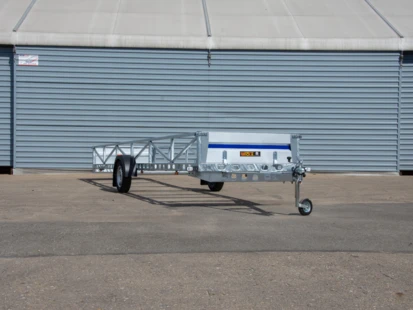
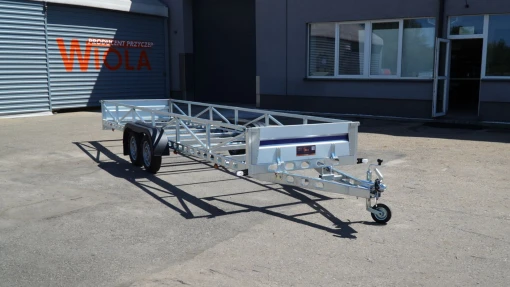
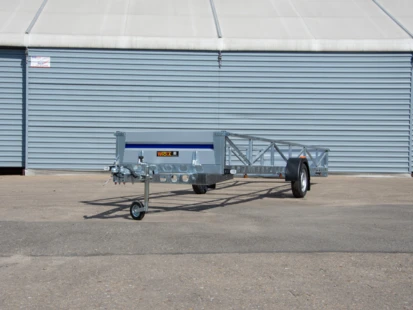
The 6-metre long-load trailer is a versatile solution for companies that regularly transport profiles, pipes, beams and other long items. This length of load space is ideal for many typical materials used by construction, metalworking, installation and manufacturing companies.
WIOLA long-load trailers from the DR600 series are available in various configurations. Single-axle and twin-axle models are available, both braked and unbraked. This means the trailer can be selected not only to suit the length of the load, but also its weight, transport frequency and the capabilities of the towing vehicle.
A lighter long-bed trailer may be suitable for occasional transport of profiles, pipes or timber. For heavier materials, it is worth considering a braked twin-axle model with a higher maximum authorised mass. The final choice should take into account the actual weight of the trailer, its load capacity and the specifications of the vehicle used for transport.
Stanchion-type long-load trailer for long materials
A stanchion flatbed is primarily designed for transporting long items such as pipes, profiles, beams and certain structures. Instead of a solid, continuous load bed, it uses supports and stanchions, between which the cargo is placed.
This solution works well for loads that do not require a full load bed. The stanchion trailer can also be fitted with a turntable, which allows the rear section of the trailer to follow the direction of travel of the vehicle. This makes manoeuvring easier when transporting particularly long items.
Before selecting a model, you should determine:
- the minimum and maximum lengths of the items to be transported,
- the weight of a single load,
- the method of supporting the load,
- the required range of adjustment,
- how the load will be secured,
- the conditions under which the trailer will most frequently be used.
A stanchion trailer is particularly useful for installation firms, materials depots, manufacturing plants and companies involved in steel and timber processing.
Steel load-bearing beams – what to look out for?
A steel-carrying trailer must be designed to handle heavy loads and the specific shape of the materials being transported. Profiles, pipes and sections can be very long, whilst concentrating a significant weight over a relatively small area. Therefore, before purchasing, you should carefully determine the weight of the most commonly transported load.
The trailer’s maximum permissible weight and its actual load capacity are of key importance. You should not choose a model based solely on the length of the load area. For heavy steel sections, a braked long-load trailer with two axles may be more suitable.
The method of securing the load is also important. The items being transported should be secured to prevent them from shifting forwards, backwards or sideways. Appropriately selected lashing straps and securing points should be used, taking into account the weight, length and shape of the materials being transported.
Frame-type or stanchion-type long-load trailer?
The choice between a frame-type and a stanchion-type long-load trailer depends primarily on the type of work being carried out.
A frame flatbed has a fixed load area and can be used to transport various types of materials. Depending on the configuration, it may feature an openwork structure, a floor, side panels or additional fittings. It is a good solution for companies transporting a variety of loads.
A stanchion-type flatbed is more specialised. It works best with long pipes, sections and beams, which can be supported at designated points. Its design makes it easy to adapt the trailer to the length of the items being transported.
Before purchasing, it is worth answering a few questions:
- what materials will be transported most frequently,
- what is their maximum length,
- how much a typical load weighs,
- do you need a solid floor,
- will the trailer be used every day,
- is a braking system required,
- what is the permissible trailer weight for the towing vehicle?
WIOLA flatbed trailers tailored to the type of transport
WIOLA flatbed trailers are available in several variants differing in design, number of axles, braking system and maximum permissible gross weight. This allows the model to be tailored to both light-weight sections and pipes, as well as heavier steel and structural components.
When choosing a trailer, it is worth considering not only your company’s current needs but also the anticipated growth of your business. A model with sufficient load capacity to spare may be more versatile and better suited to future orders.
Contact a WIOLA adviser, provide the length and approximate weight of the materials to be transported, and we will help you choose the right long-load trailer.