(32) 232 19 65

Articles
Tandem double-axle trailers – from 500 to 3,500 kg
Twin-axle trailers have many advantages. One of them is a higher load capacity and better weight distribution of the cargo being carried. Contrary to popular belief, driving a two-axle trailer does not always require a B+E driving licence. We have covered this in more detail in our guide: https://www.przyczepy-wiola.eu/en/articles/car-trailers-which-one-should-you-choose
A tandem twin-axle trailer also places significantly less strain on the towing vehicle. Thanks to the use of two axles, the load exerts less pressure on each individual wheel, thereby reducing the pressure on the tow ball. This means we put less strain on the car’s rear suspension. In the event of a puncture to one of the tyres, we can still safely reach a service centre or tyre repair shop. In our opinion, all trailers over 300 cm in length should have two axles.
Among the disadvantages of twin-axle trailers is reduced manoeuvrability, both when towing and when manoeuvring the trailer itself. In the latter case, simply raise the support wheel as high as possible so that the front axle wheels do not touch the ground. However, this may be difficult when the trailer is loaded.
Twin-axle trailers are divided into two main categories:
unbraked and braked.
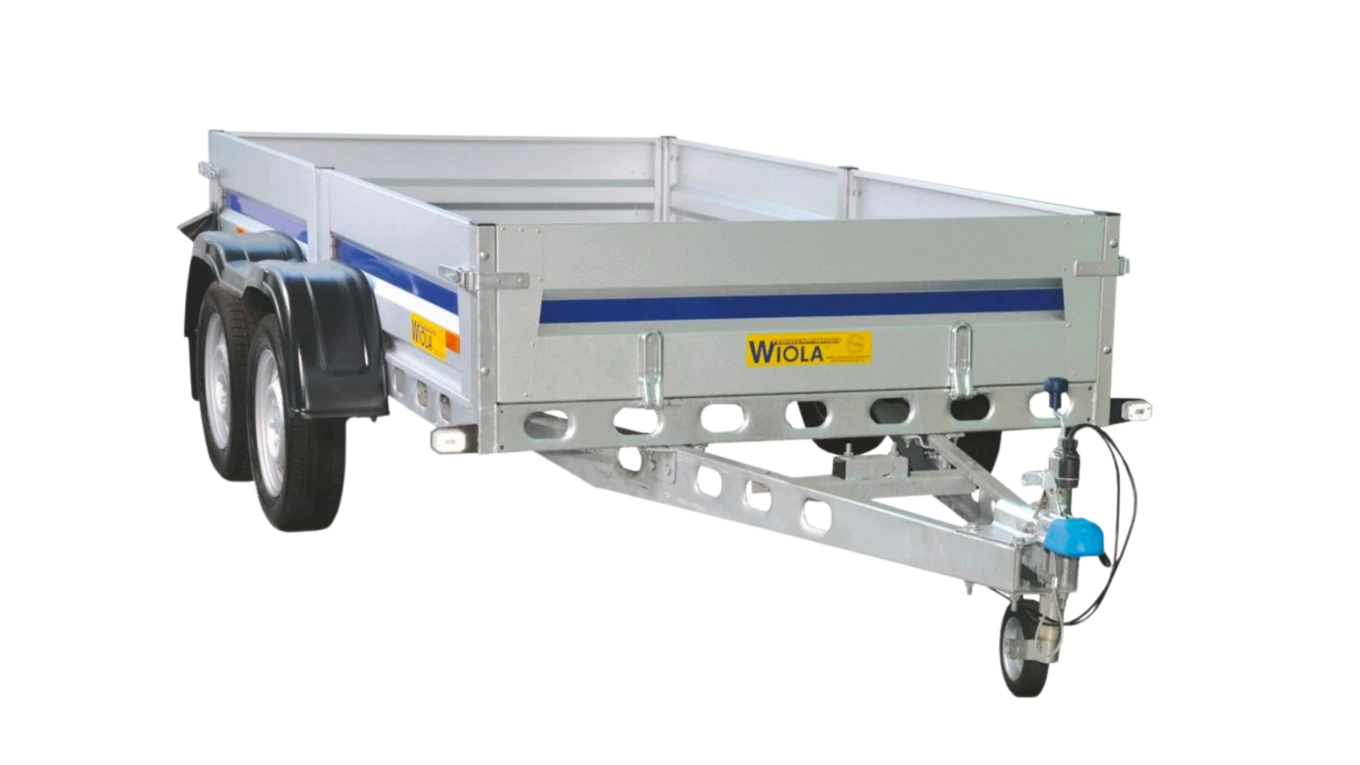
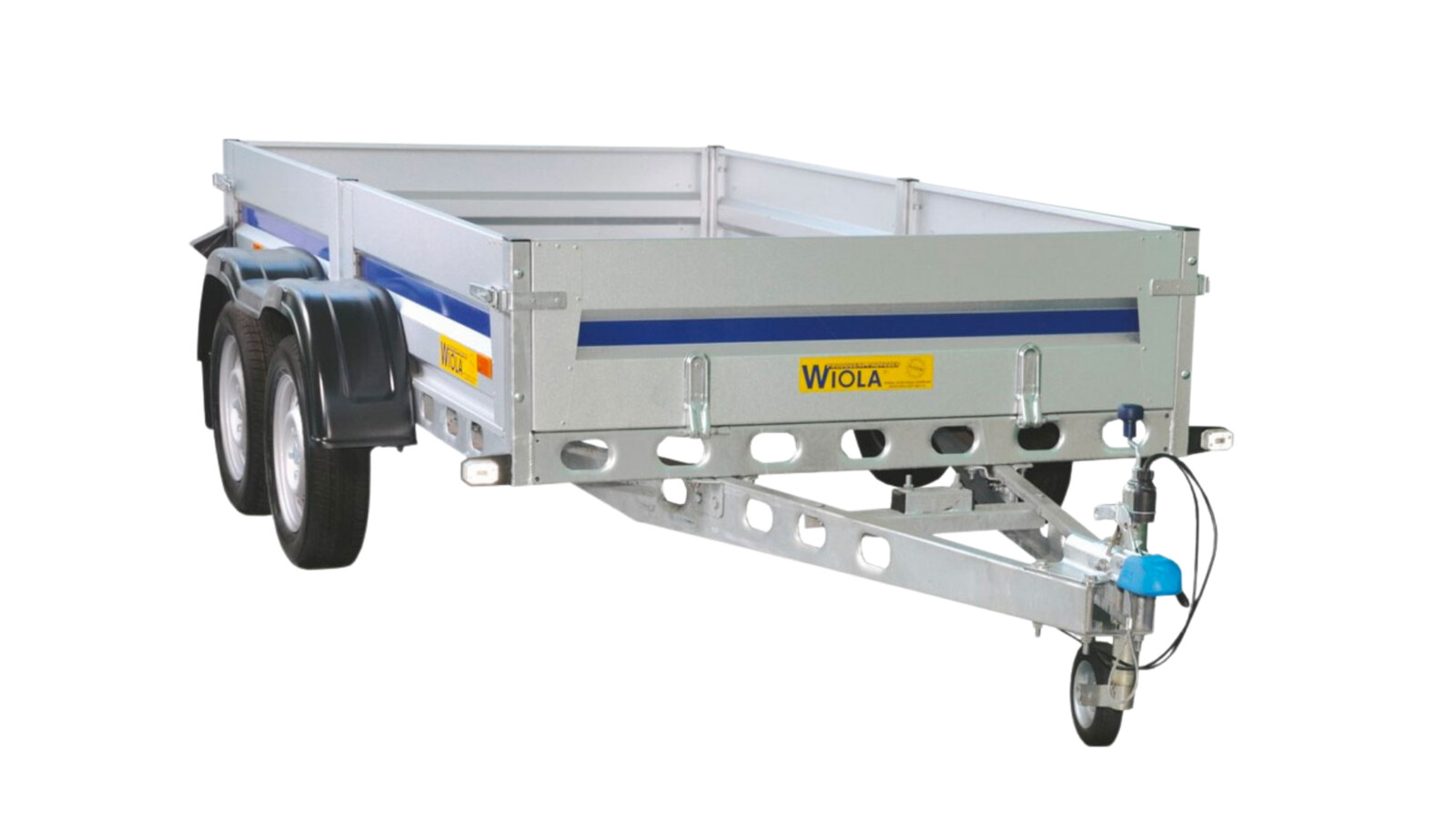
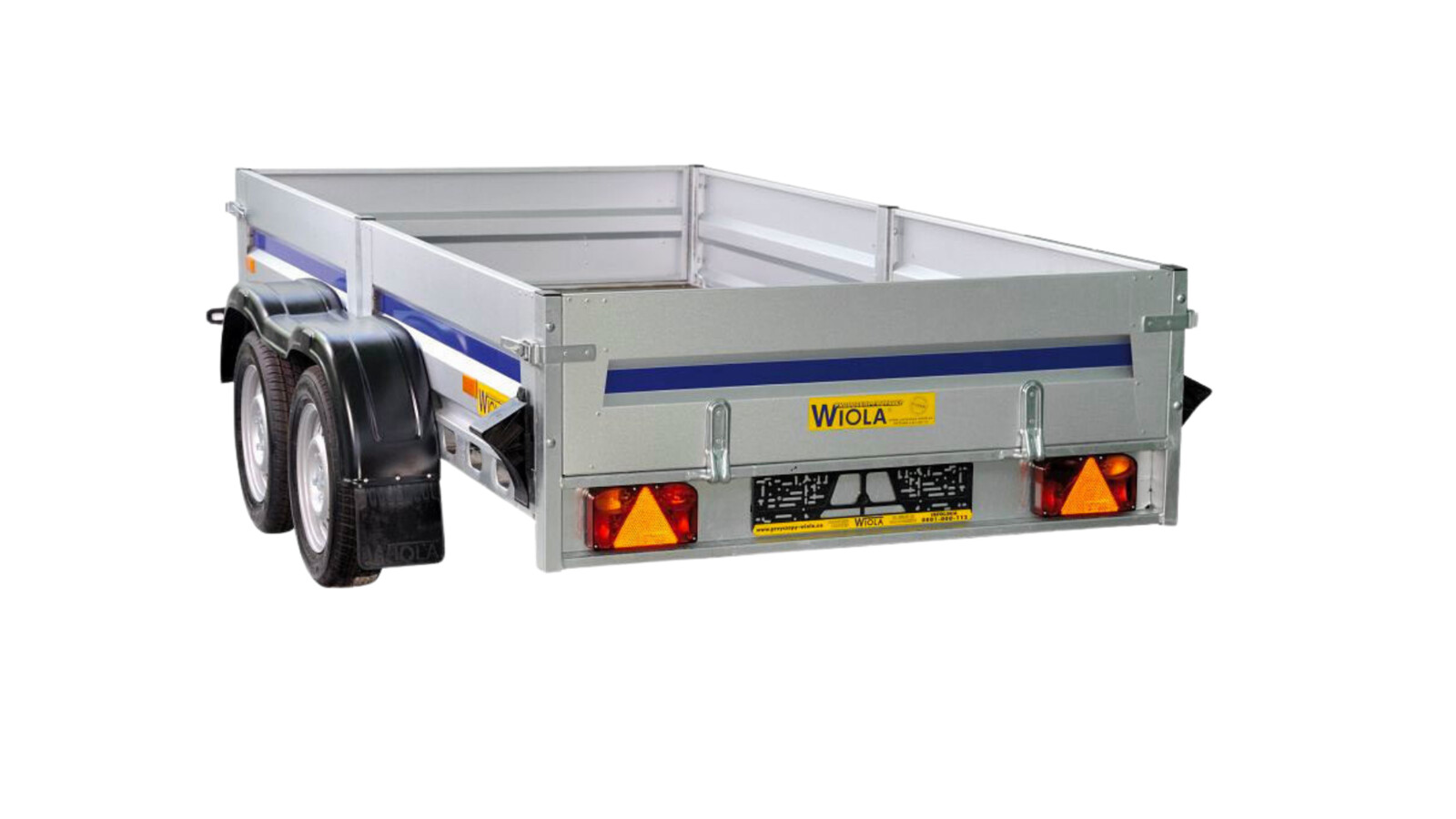
Two-axle unbraked tandem trailers up to 750 kg
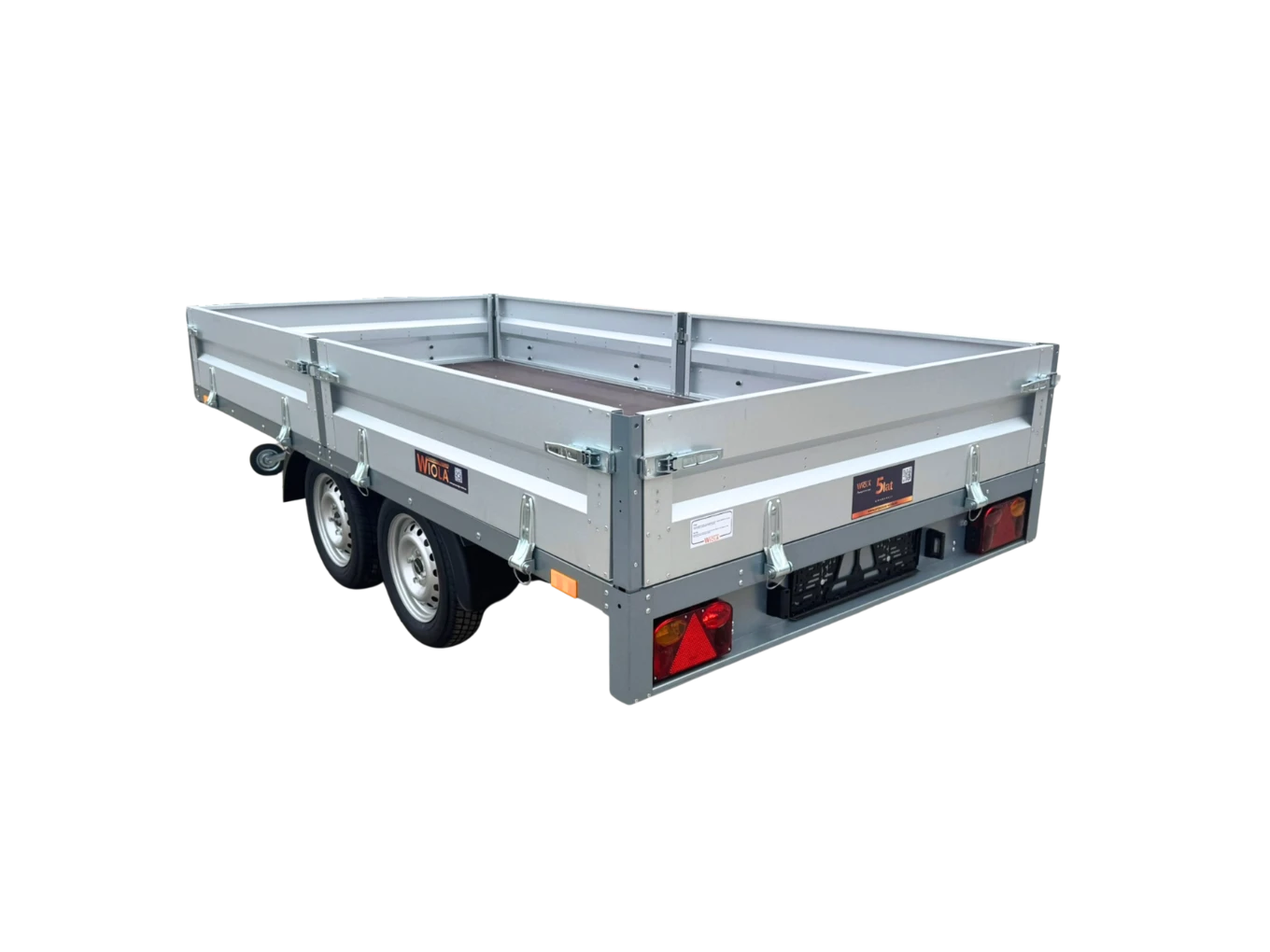
Unbraked tandem two-axle trailers up to 750 kg with wheels under the floor
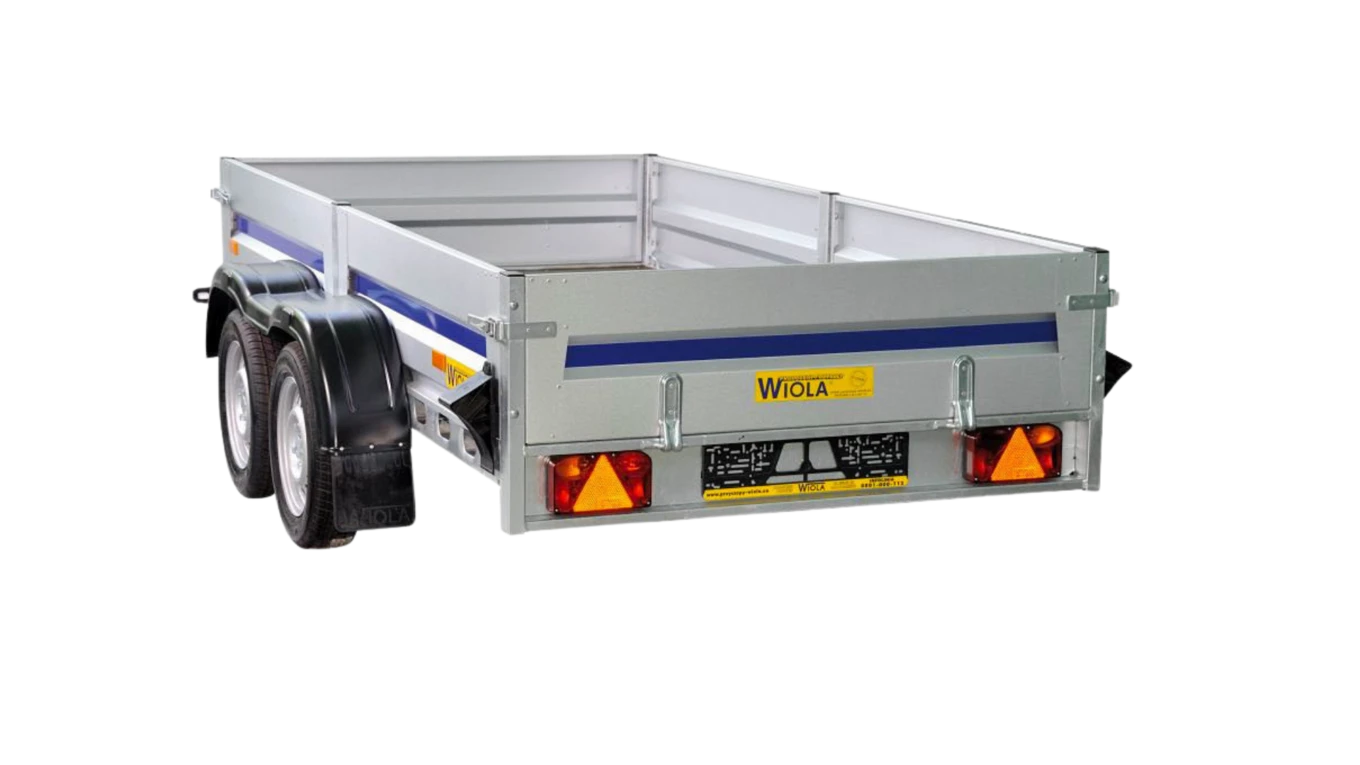
Two-axle unbraked tandem trailers up to 1000 kg
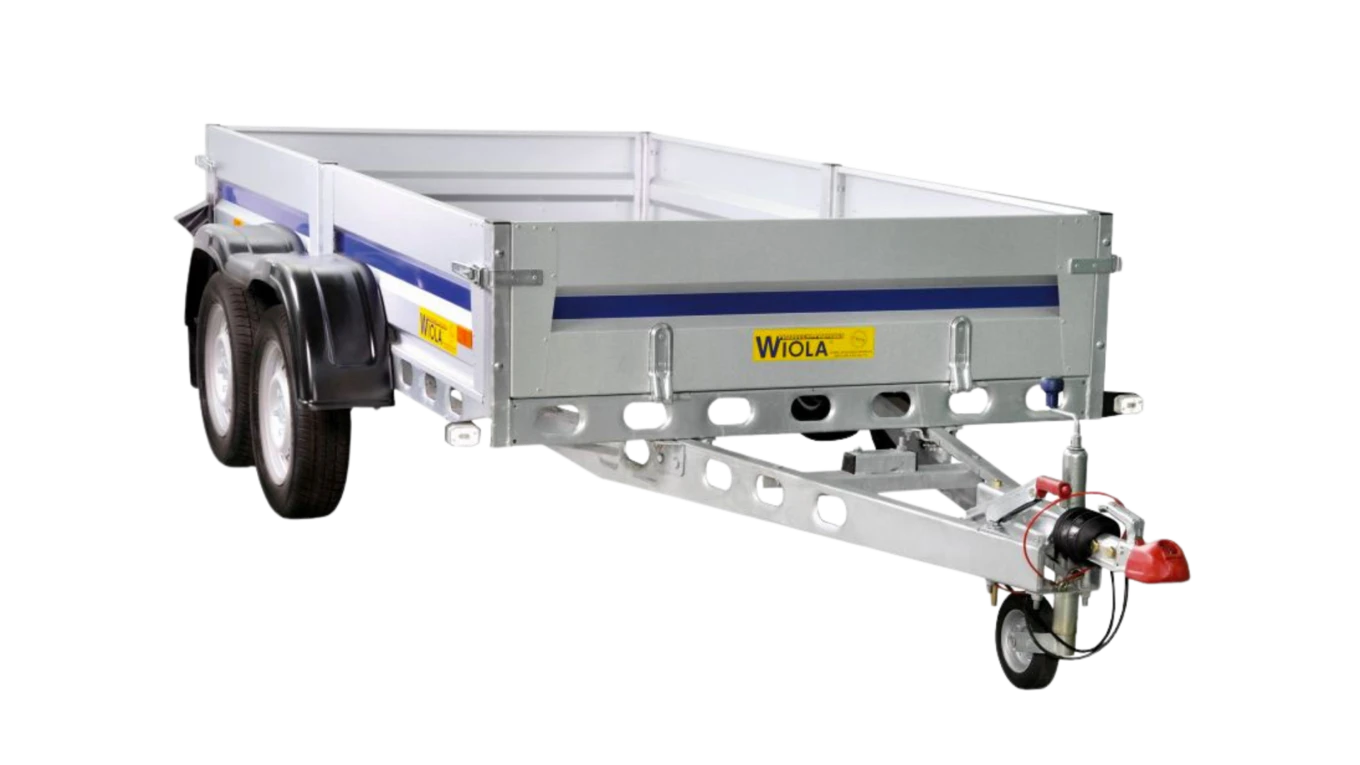
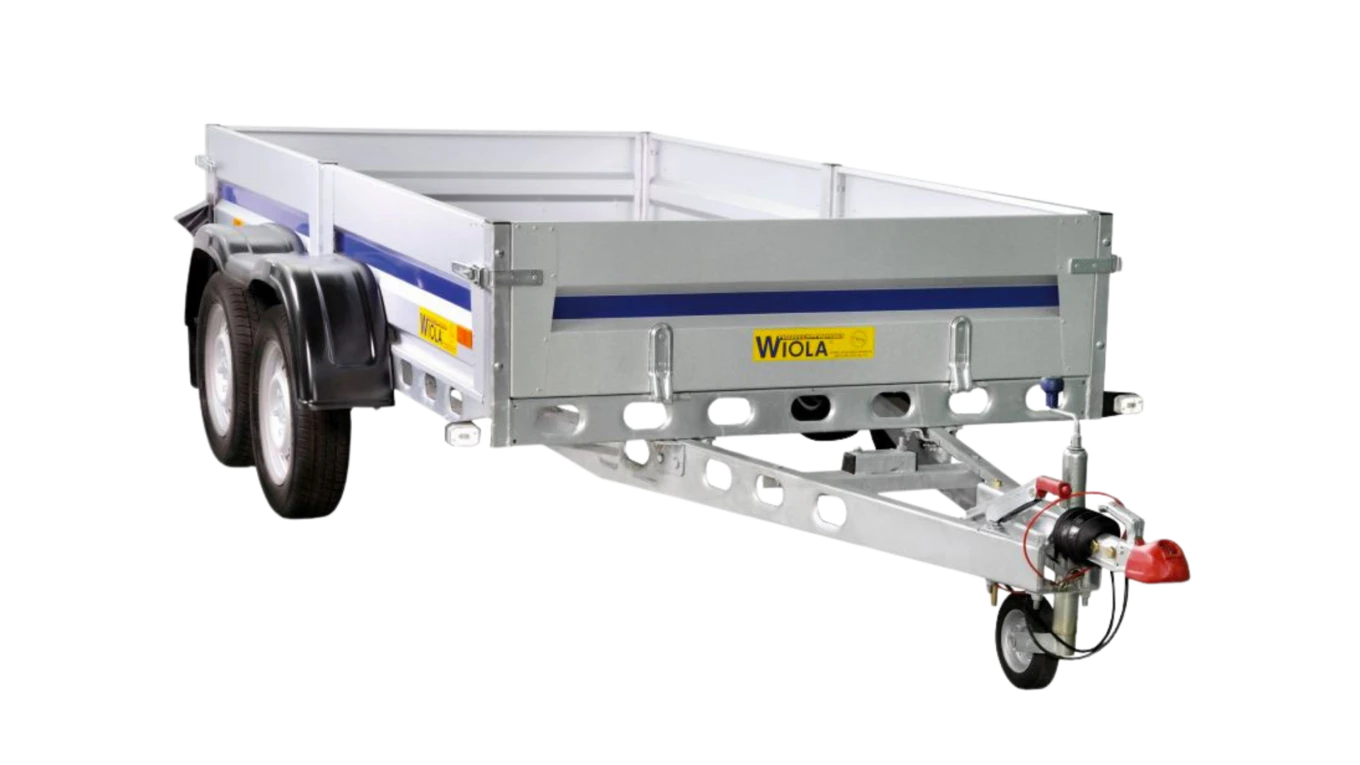
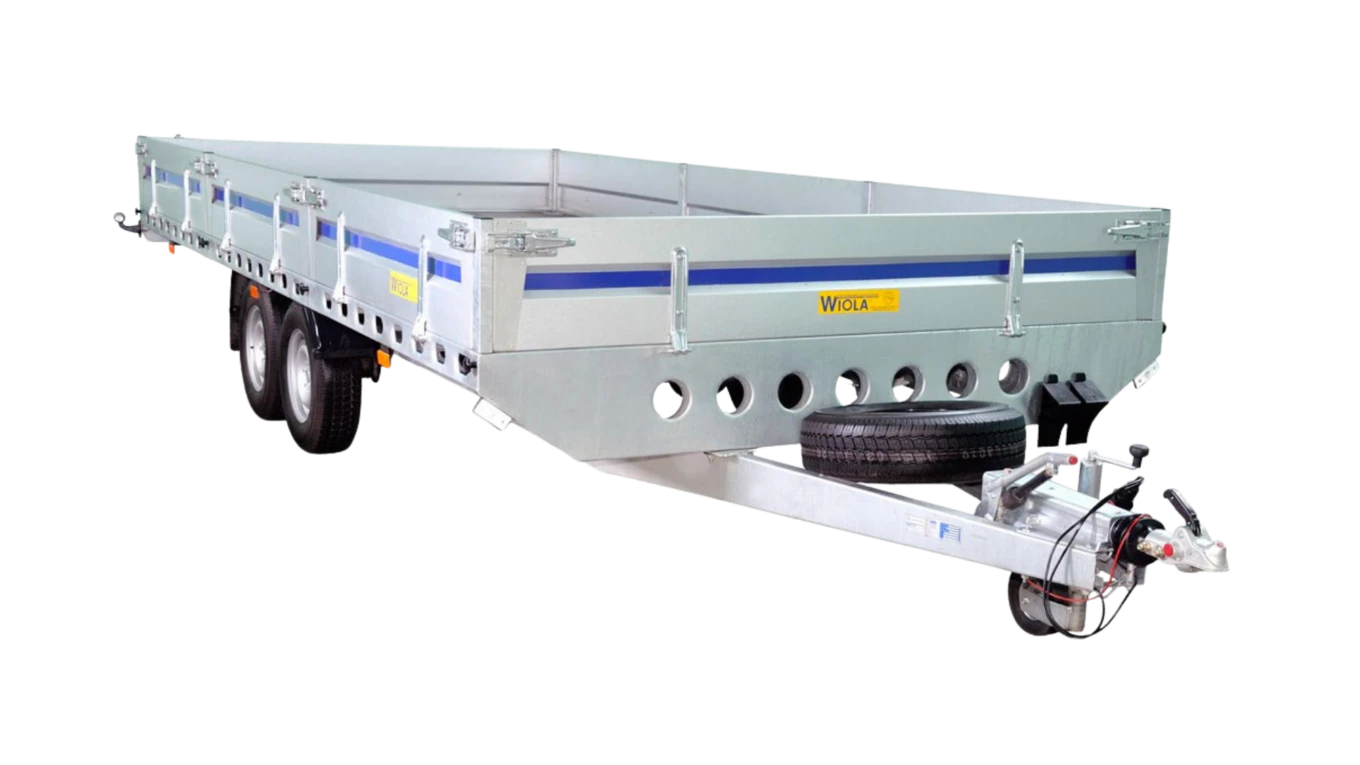
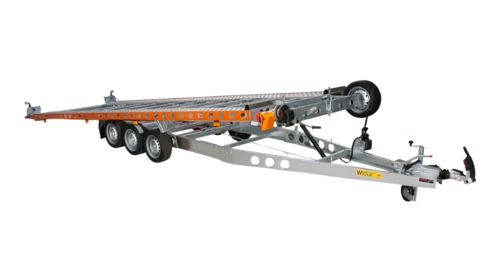
Two-axle trailers with brakes up to 2700 kg with wheels under the floor*
*Larger tandem trailers have wheels hidden under the floor. This allows you to maximise the dimensions of the trailer and achieve a loading width of up to 240 cm.
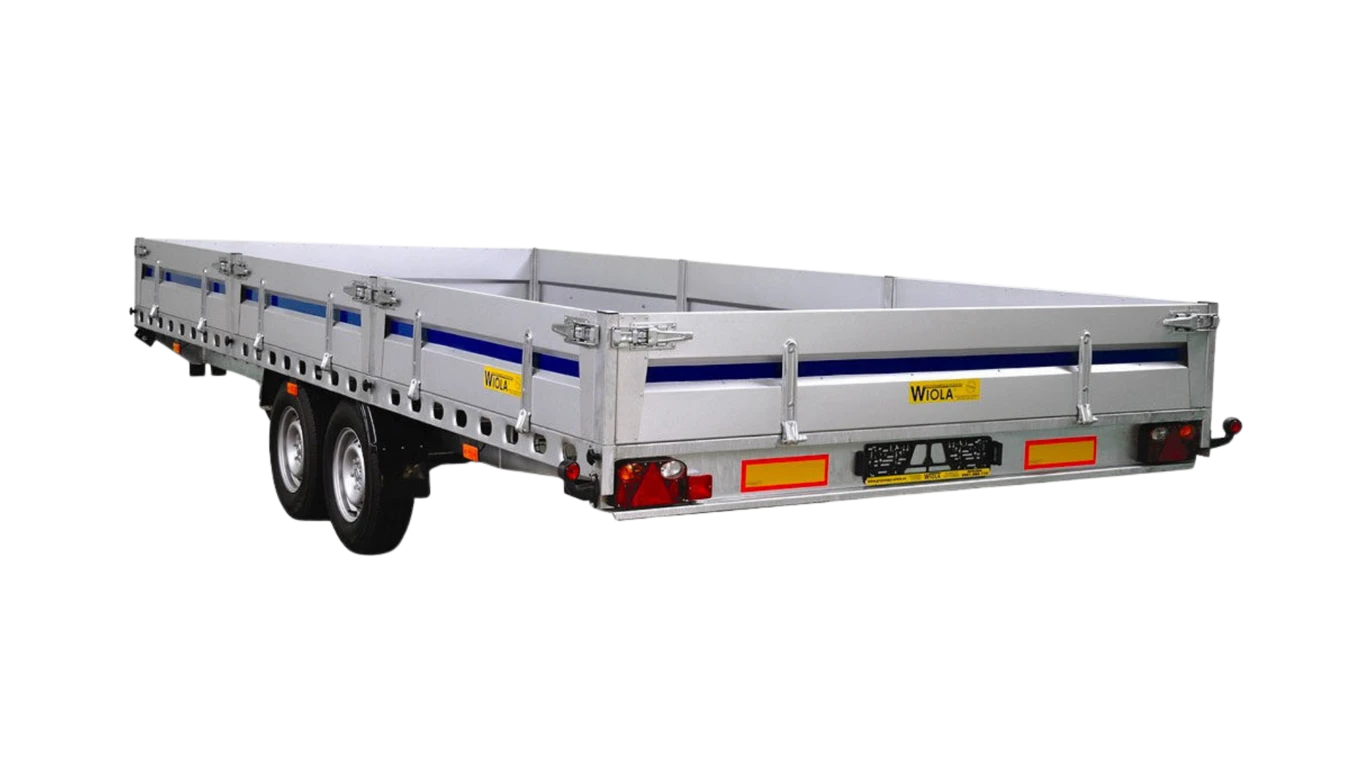
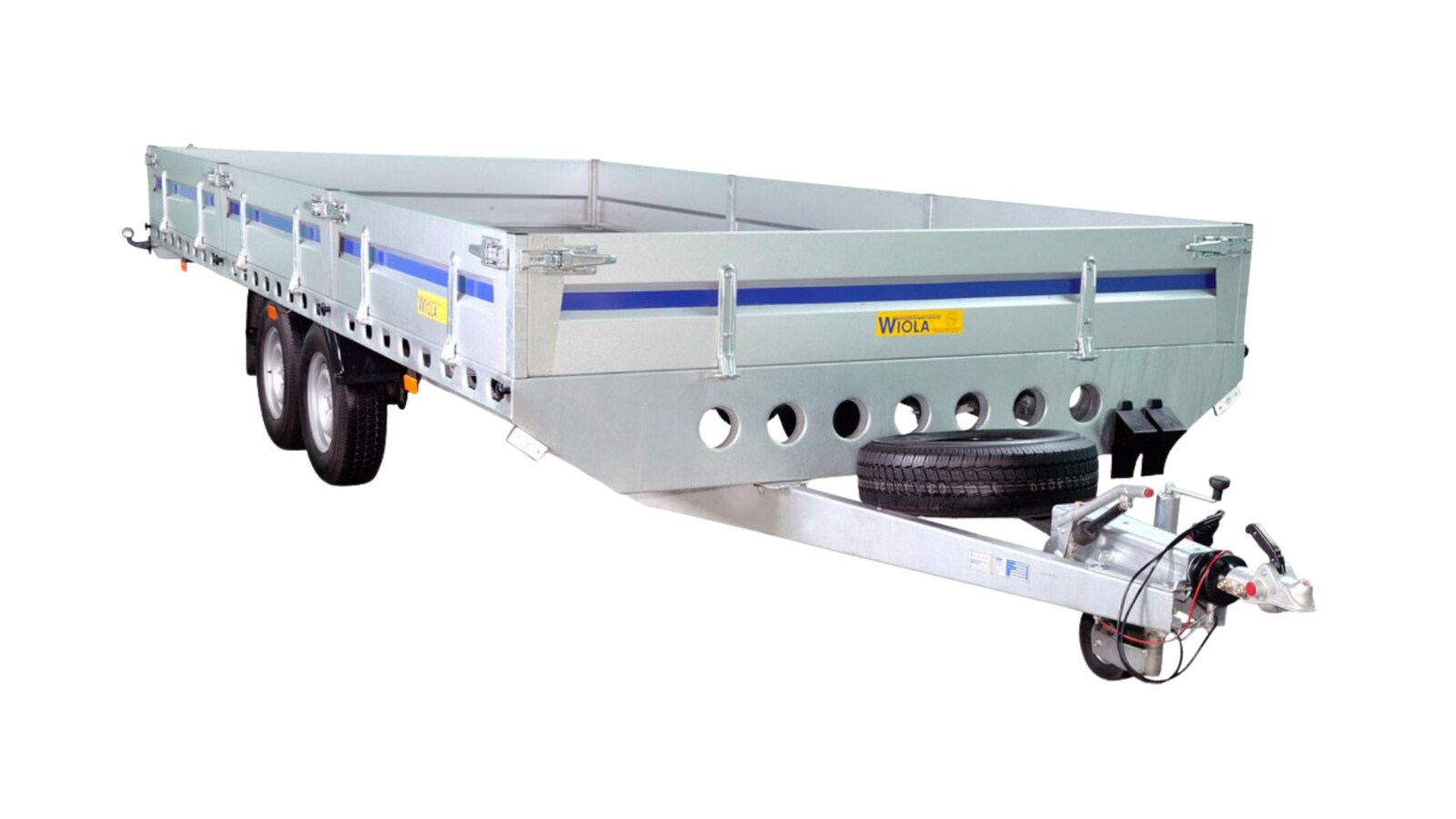
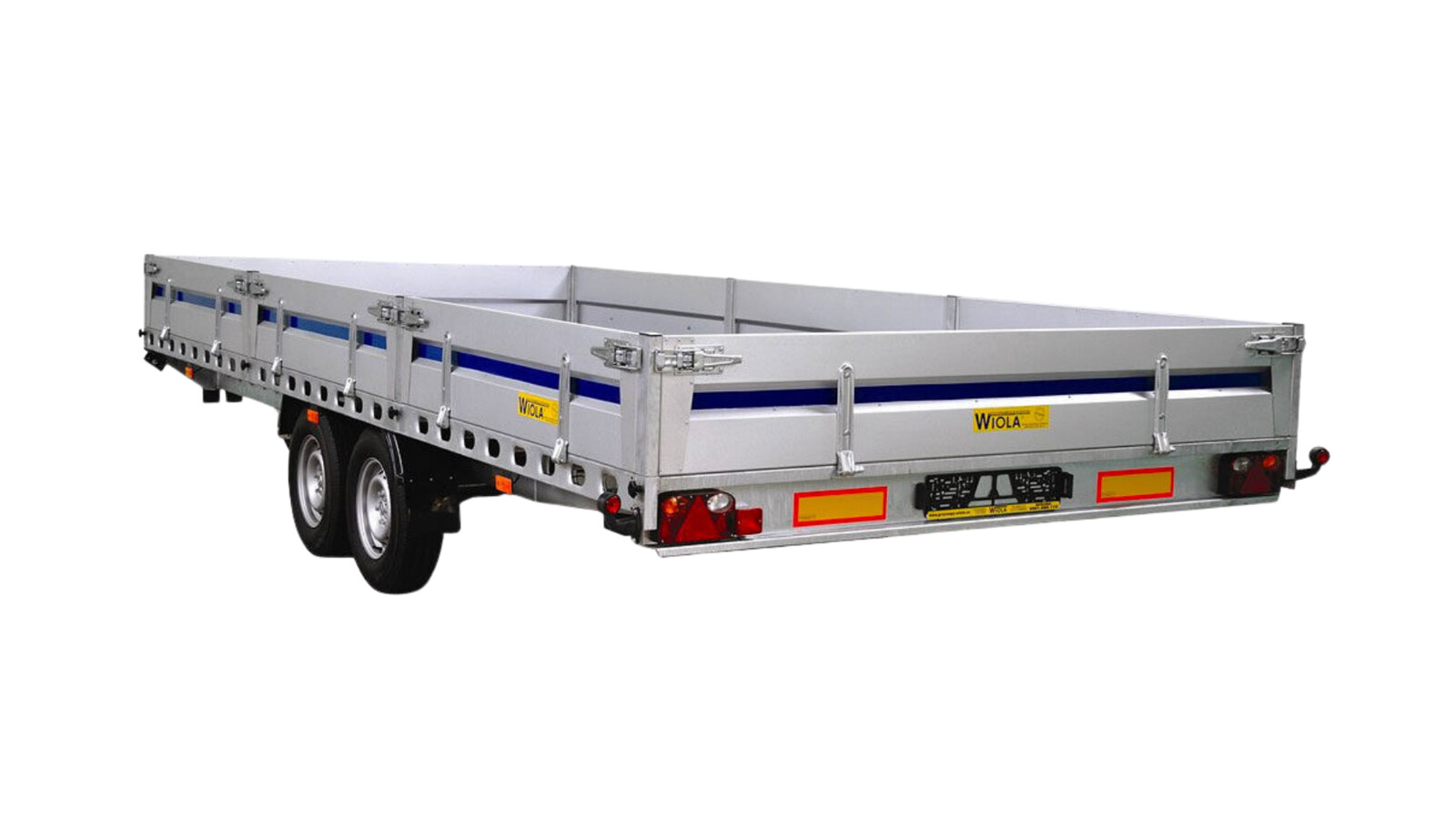
Tandem trailers with brakes up to 3500 kg with wheels under the floor*
*Larger tandem trailers have wheels hidden under the floor. This allows you to maximise the dimensions of the trailer and achieve a loading width of up to 240 cm.
All our trailers can be customised in terms of dimensions and running gear, as we have approval for tens of thousands of trailer variants. For a quote for a non-standard trailer, please contact our sales department.
What is a tandem trailer?
A tandem trailer has two axles mounted close together. This configuration distinguishes it from a conventional single-axle trailer and from trailers in which the axles are located at opposite ends of the structure.
The terms ‘tandem trailer’, ‘tandem trailers’ and the colloquial term ‘tandem trailer’ most commonly refer to two-axle trailers in which the wheels of both axles are situated a short distance apart.
The tandem design is used in both small, light trailers and large heavy-duty trailers with a maximum authorised mass (MAM) of 2,000, 2,700, 3,000 or 3,500 kg.
Why choose a twin-axle trailer?
A twin-axle car trailer is a good choice, particularly if you regularly transport heavier, longer or bulkier loads.
The main advantages of a tandem trailer are:
- better distribution of the load across all four wheels,
- greater stability whilst driving,
- reduced tilting of the load bed,
- the potential for a higher load capacity,
- more stable behaviour during loading and unloading,
- a wider choice of load area lengths and widths,
- the ability to transport machinery, building materials and long items,
- greater safety in the event of a tyre failure.
However, having two axles does not exempt the user from ensuring the load is correctly distributed. The weight should be distributed as evenly as possible, properly secured and positioned in such a way as to maintain the correct load on the vehicle’s tow bar.
Two-axle trailers with a maximum load capacity of 750 kg
Twin-axle trailers with a maximum authorised mass of up to 750 kg may be registered as light trailers provided their maximum authorised mass does not exceed 750 kg. The number of axles does not affect whether a trailer falls into this category – its maximum authorised mass is the decisive factor.
A two-axle light trailer offers a larger loading area and more stable support than many standard single-axle models. It can be used, amongst other things, to transport:
- garden equipment,
- furniture and household goods,
- renovation materials,
- motorbikes and quads,
- small machinery,
- business equipment,
- goods requiring a longer load bed.
A lightweight twin-axle trailer is a particularly good option for users who need a larger load space but do not wish to choose a trailer with a maximum authorised mass (MAM) exceeding 750 kg.
The WIOLA range of lightweight tandem trailers includes models from the Krakus, Mazowia and Silezia ranges, as well as trailers with wheels mounted beneath the floor. The individual versions differ in length, width, frame design and available optional extras.
Two-axle trailer with brakes
A twin-axle trailer with a brake is ideal for transporting heavier loads and for frequent journeys over longer distances. The overrun brake assists in braking the trailer when the car begins to slow down.
Our range also includes a twin-axle trailer with an overrun brake and a maximum authorised mass (MAM) of up to 750 kg. This solution combines the advantages of a lightweight trailer with additional support during braking.
Larger tandem trailers with a gross vehicle weight rating (GVWR) exceeding 750 kg are fitted with braked axles and a suitably selected overrun device. Depending on the version, they may also feature:
- axle shock absorbers,
- a coupling with a track stabiliser,
- an automatic support wheel,
- additional supports,
- wheel chocks,
- load securing handles,
- ramps,
- steel or aluminium side panels,
- mesh extensions,
- a frame with a tarpaulin.
1,500 kg twin-axle trailer
A 1,500 kg twin-axle trailer may refer to a model with a maximum authorised mass (MAM) of 1,500 kg, or to a trailer with axles of a specified load-bearing capacity. Before purchasing, you should always check whether the specified value refers to the maximum authorised mass, the payload or the chassis specifications.
Models with a GVW of around 1,500 kg are chosen, amongst others, by construction companies, installation teams, service providers and users transporting heavier equipment. Compared to a light trailer, they offer a higher payload and can be fitted with a more sophisticated braking system and a sturdier frame construction.
When making your choice, please take the following into account:
- the trailer’s unladen weight,
- the planned load weight,
- the maximum permissible trailer weight specified for the vehicle,
- the required dimensions of the load area,
- the method of loading,
- the type of items being transported.
The trailer’s maximum authorised mass should be compatible with the towing vehicle’s specifications and the driver’s licence entitlements.
Tandem trailers with a maximum authorised mass of up to 2,000 kg
Twin-axle trailers with a maximum authorised mass (MAM) of up to 2,000 kg are designed for the transport of machinery, building materials, scaffolding, structural components and company equipment.
Trailers in this class are available with various body lengths and widths. They can be fitted with a high tarpaulin, side extensions, floor tie-downs, supports and solutions to facilitate the transport of specific machinery or equipment.
The tandem configuration in this category offers a good balance of load capacity, stability and the relatively compact dimensions of the entire combination.
Two-axle trailers up to 2,700 kg
Tandem trailers with a maximum authorised mass (MAM) of up to 2,700 kg are designed for more demanding transport applications. In larger models, the wheels can be positioned beneath the floor, allowing the entire width of the trailer to be used as a load area.
This design facilitates side loading, allows for the use of opening side panels and provides a load area up to approximately 240 cm wide.
Trailers of this class are ideal for transporting:
- mini-excavators and construction machinery,
- industrial equipment,
- pallets and building materials,
- steel structures,
- gardening equipment,
- specialist vehicles and machinery.
Tandem trailers up to 3,500 kg
The largest WIOLA tandem trailers can have a gross vehicle weight of up to 3,500 kg. These are designed for the professional transport of heavy and bulky loads.
Models in the W35 range can have a load compartment length of between approximately 4 and almost 8 metres. The wheels, positioned beneath the floor, allow the full width of the platform to be utilised and facilitate loading from various sides.
Twin-axle trailers with a capacity of up to 3,500 kg can be fitted with, amongst other things:
- steel or aluminium side panels and extensions,
- a tarpaulin with a frame,
- additional floor reinforcements,
- axle shock absorbers,
- a stabiliser,
- transport handles,
- stabilising supports,
- machine access ramps,
- toolbox,
- work lights.
Examples of WIOLA lorry trailers feature a twin-axle running gear, an overrun brake, a hot-dip galvanised frame and the option to adjust the maximum authorised mass within a specified type-approval range.
A single-axle trailer or a tandem trailer?
A single-axle trailer is usually lighter, cheaper and easier to move by hand. It is well suited to the occasional transport of small loads.
A tandem trailer is a better choice when:
- the load bed is more than about 3 metres long,
- heavy items are transported regularly,
- stability whilst driving is important,
- the trailer will be used intensively by the business,
- a large loading area is required,
- machinery or irregularly shaped materials are transported.
Bear in mind that an unladen tandem trailer is more difficult to manoeuvre by hand than a light single-axle model. When making tight turns, the wheels on both axles offer greater resistance. Manoeuvring can be made easier by adjusting the support wheel correctly; however, particular care must be taken when the trailer is loaded.
How do you choose the right tandem trailer?
Before purchasing a trailer, you should first and foremost determine the type, dimensions and weight of the loads to be carried. The length of the load bed alone should not be the sole criterion for your choice.
Gross vehicle weight
The maximum authorised mass (MAM) includes the trailer’s unladen weight and the weight of the load being carried. The heavier the structure and additional equipment, the lower the actual payload will be for the same MAM value.
Load capacity
The load capacity must be adjusted to allow for a suitable margin. Overloading the trailer affects safety, the structural integrity of the trailer and the handling of the entire combination.
Dimensions of the load compartment
It is important to take into account not only the length and width of the load, but also the space required to secure it properly. In the case of machinery, the wheelbase, as well as the height and angle of the ramps used, must also be checked.
Overrun brake
If you frequently transport heavy loads, it is worth choosing a model fitted with braked axles. A two-axle trailer with an overrun brake improves control of the combination when slowing down.
Loading method
Side panels that can be opened or removed make it easier to load the trailer using a forklift. Wheels fitted beneath the floor allow the full width of the platform to be utilised, whilst ramps enable machinery, motorbikes and other vehicles to be driven onto the trailer.
Tandem trailers tailored to the customer’s needs
WIOLA twin-axle trailers are available in a range of type-approved variants. Depending on the model, you can customise the dimensions of the load area, the maximum authorised mass (MAM), the type of side panels, the body configuration and the optional extras.
This allows the trailer to be configured for the transport of, amongst other things, machinery, building materials, gardening equipment, motorbikes, quads, pallets or bulky items.
Before choosing a specific model, it is worth contacting the WIOLA sales department. Based on the weight and dimensions of the load to be carried, an advisor will help you select the appropriate tandem trailer, its maximum authorised mass (MAM), chassis configuration and equipment.
Frequently Asked Questions
Is a two-axle trailer with a capacity of up to 750 kg considered a light trailer?
Yes. If the maximum authorised mass (MAM) of the trailer does not exceed 750 kg, it may be classified as a light trailer, regardless of whether it has one or two axles.
Does every tandem trailer have an overrun brake?
No. Both lightweight unbraked tandem trailers and models fitted with an overrun brake are available. The type of running gear should be selected according to the maximum authorised mass, the trailer’s intended use and the vehicle’s specifications.
Is a two-axle trailer more stable than a single-axle one?
When loaded correctly, a twin-axle trailer usually provides more stable support for the load and distributes the weight more evenly across the wheels. However, this is no substitute for securing and positioning the load properly.
Does a 1,500 kg twin-axle trailer have a load capacity of 1,500 kg?
Not necessarily. The figure of 1,500 kg could refer to the maximum authorised mass, the axle load capacity or some other technical parameter. The payload is calculated by subtracting the trailer’s unladen weight from its maximum authorised mass.
What sort of car can tow a tandem trailer?
You should check the details on the vehicle registration certificate, particularly items O.1 and O.2, as well as the maximum authorised mass of the entire combination. The type of trailer and the category of driving licence you hold are also important.
What tandem trailer gross vehicle weight rating (GVWR) should you choose?
The maximum authorised mass (MAM) should take into account the trailer’s unladen weight, the maximum weight of the load being carried, the vehicle’s specifications and the required load reserve. For occasional light loads, a model with a maximum authorised mass of up to 750 kg may suffice, whilst for machinery and professional applications, a braked trailer with a higher maximum authorised mass would be preferable.


 32 232 19 65
  biuro@przyczepy-wiola.eu