(32) 232 19 65

Articles
Car trailers – which one should you choose?
Car trailers – definition
‘Car trailers’ is a fairly broad term used to describe vehicles that are coupled to a car. They have many uses, but the most common are box trailers with side panels, used for transporting goods. In this post, we will try to explain the different types of trailers available on the Polish market.
Utility trailers – light
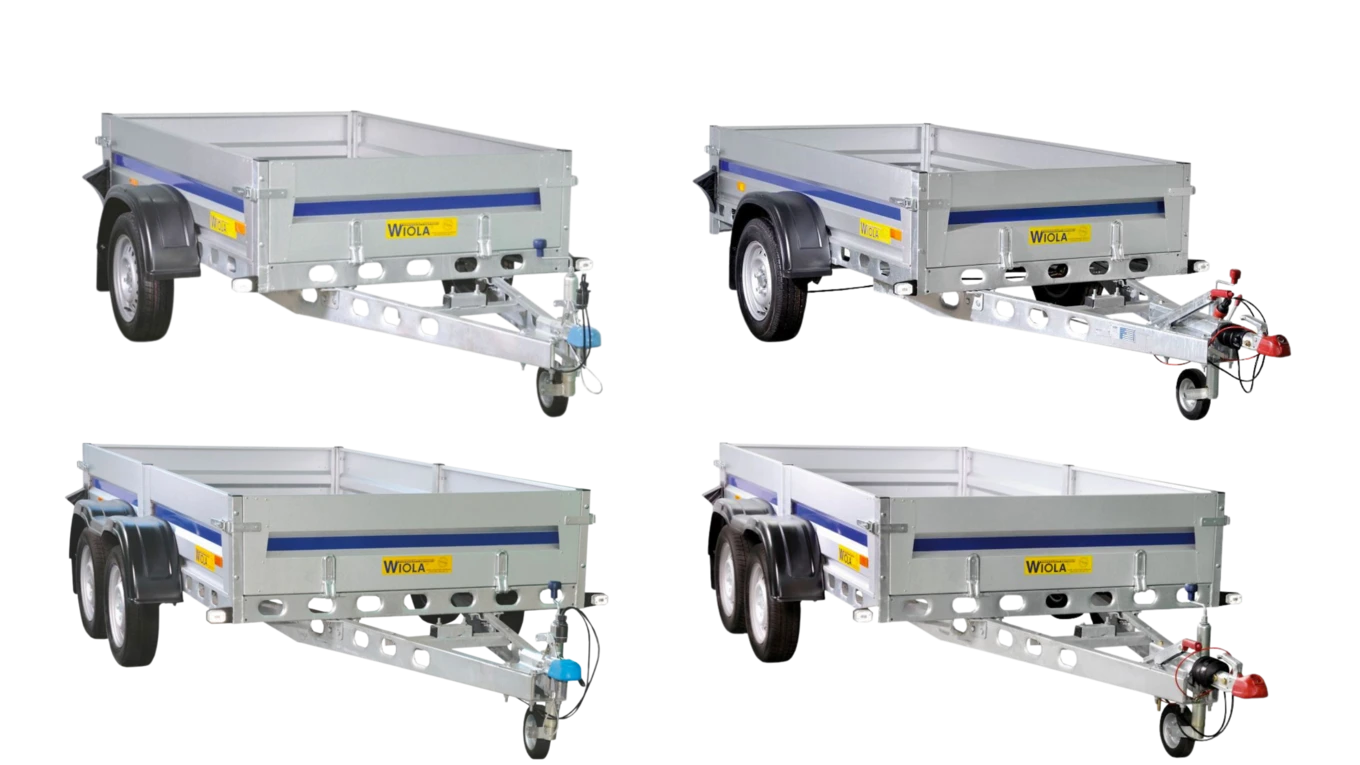
They are usually fitted with side panels to prevent the load from shifting beyond the trailer’s outline. The most popular dimensions are 2500 × 1300 mm (Krakus) and 3000 × 1500 mm (Silezia). They are quite versatile, as they have a plywood floor, allowing them to transport sand or other building materials. Customers most often choose so-called light trailers – i.e. those with a maximum permissible weight not exceeding 750 kg – on one or two axles.
Freight trailers – for lorries
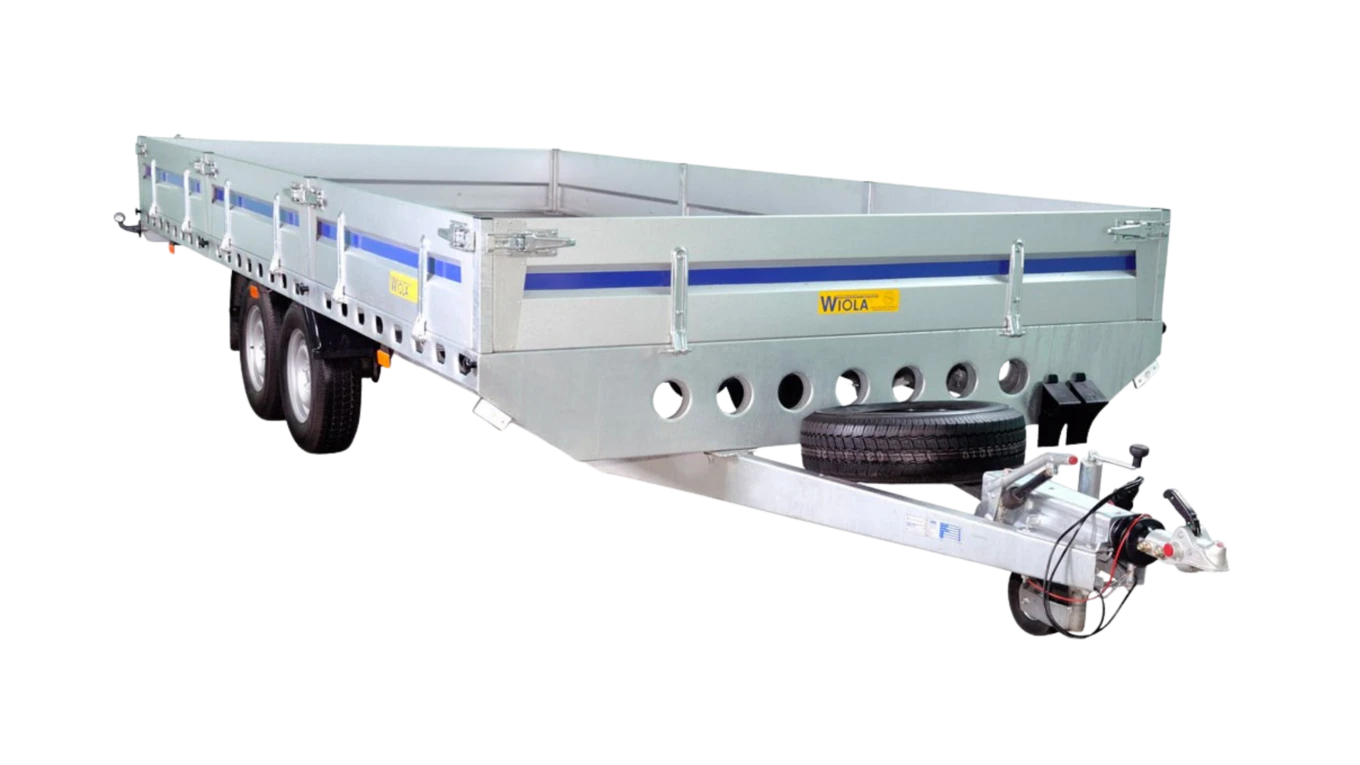
They serve a similar purpose to light goods trailers, but have a much higher load capacity and are significantly larger. Our range includes models with load capacities from 750 to 3,500 kg and a maximum length of 850 cm. Trailers of this type can carry a really substantial load.
Trailers for transporting vehicles
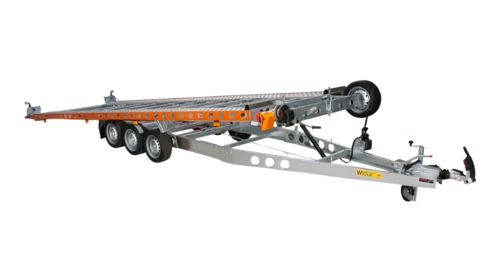
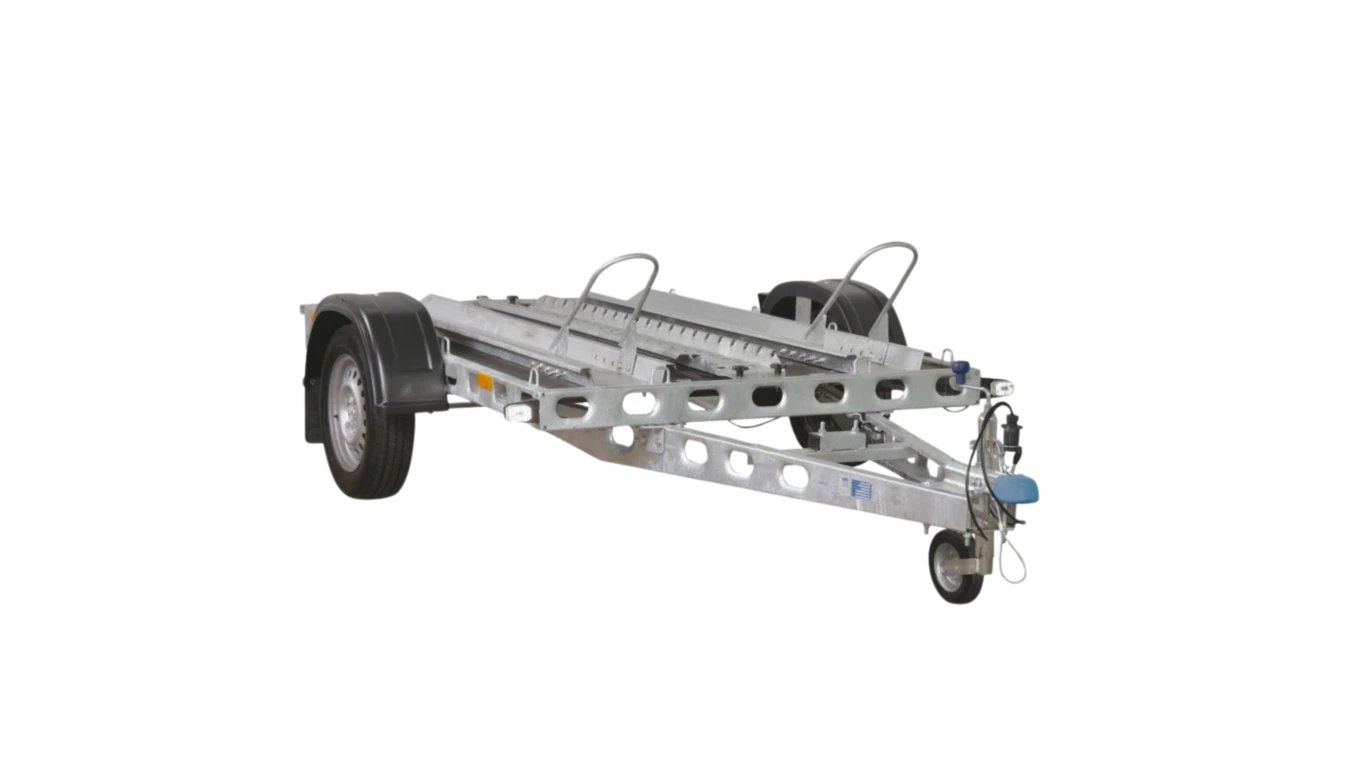
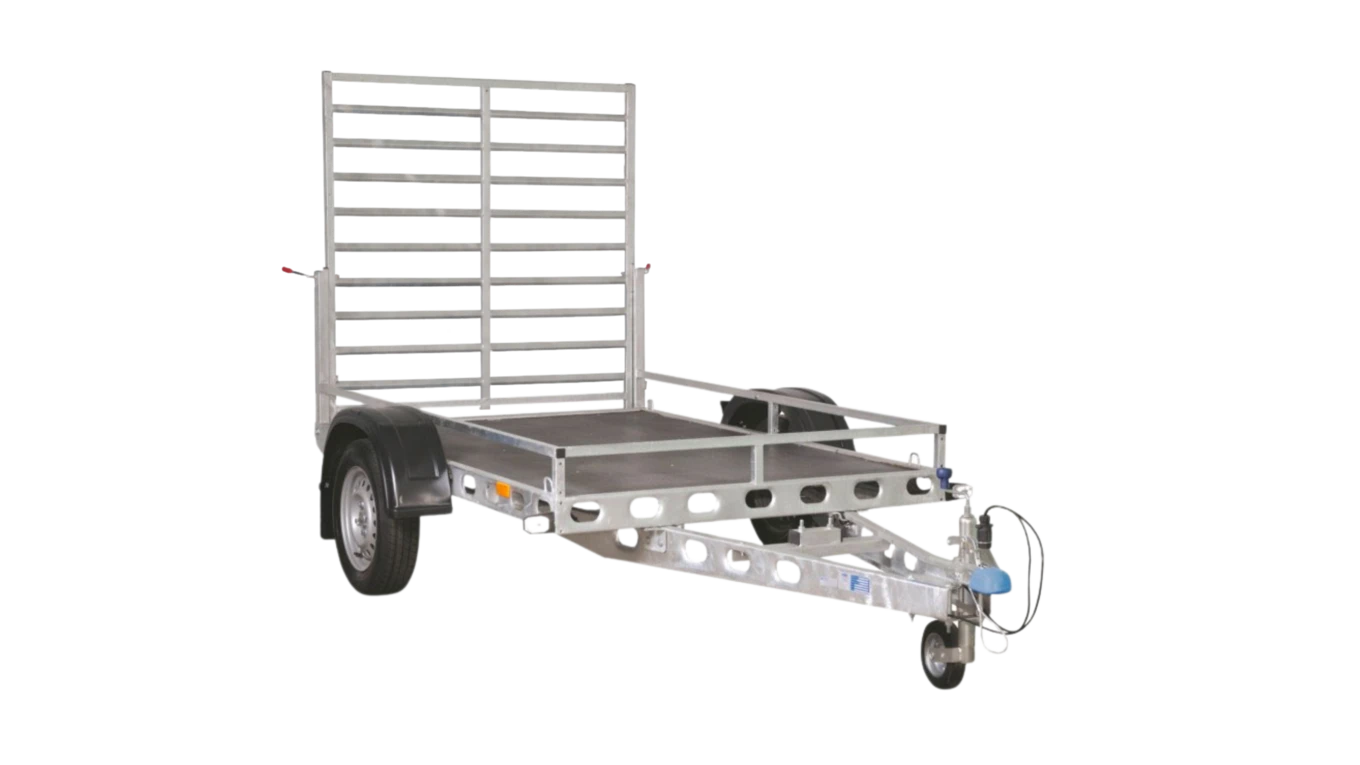
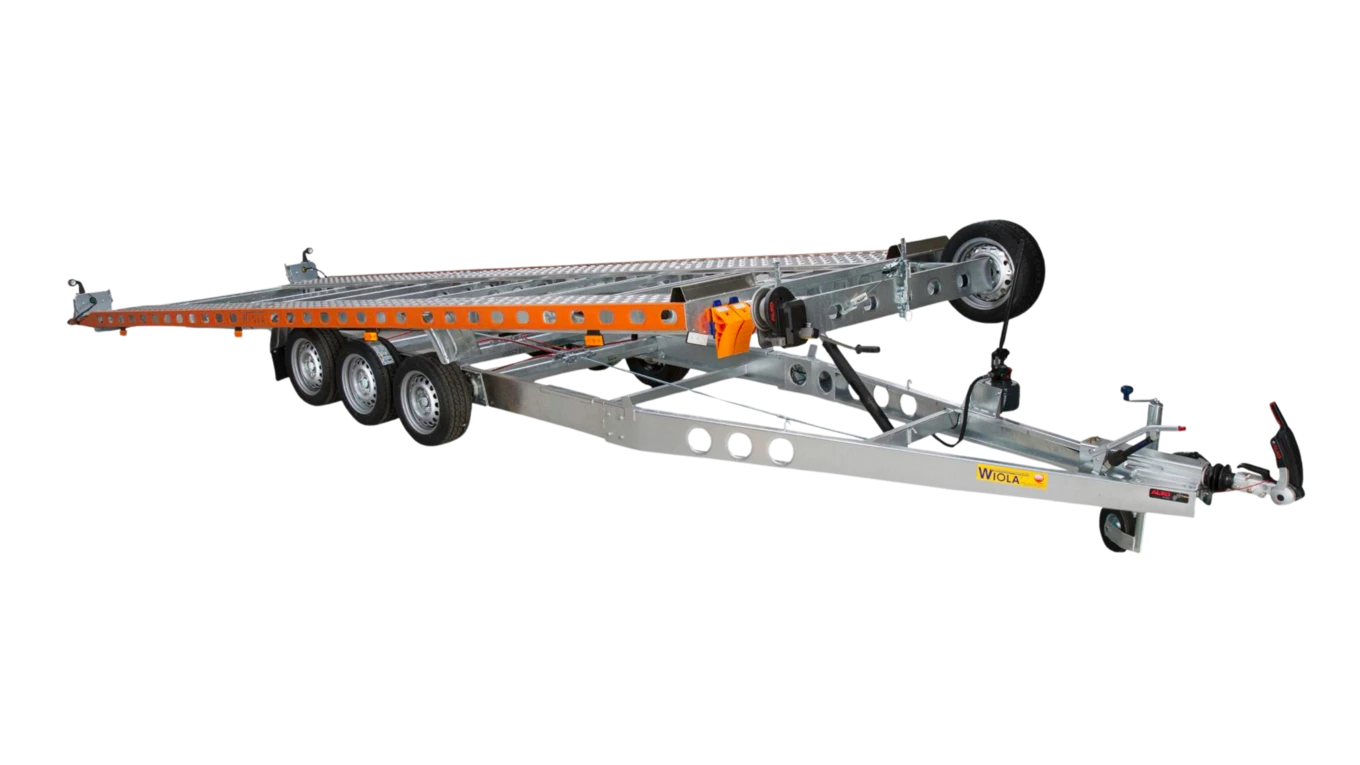
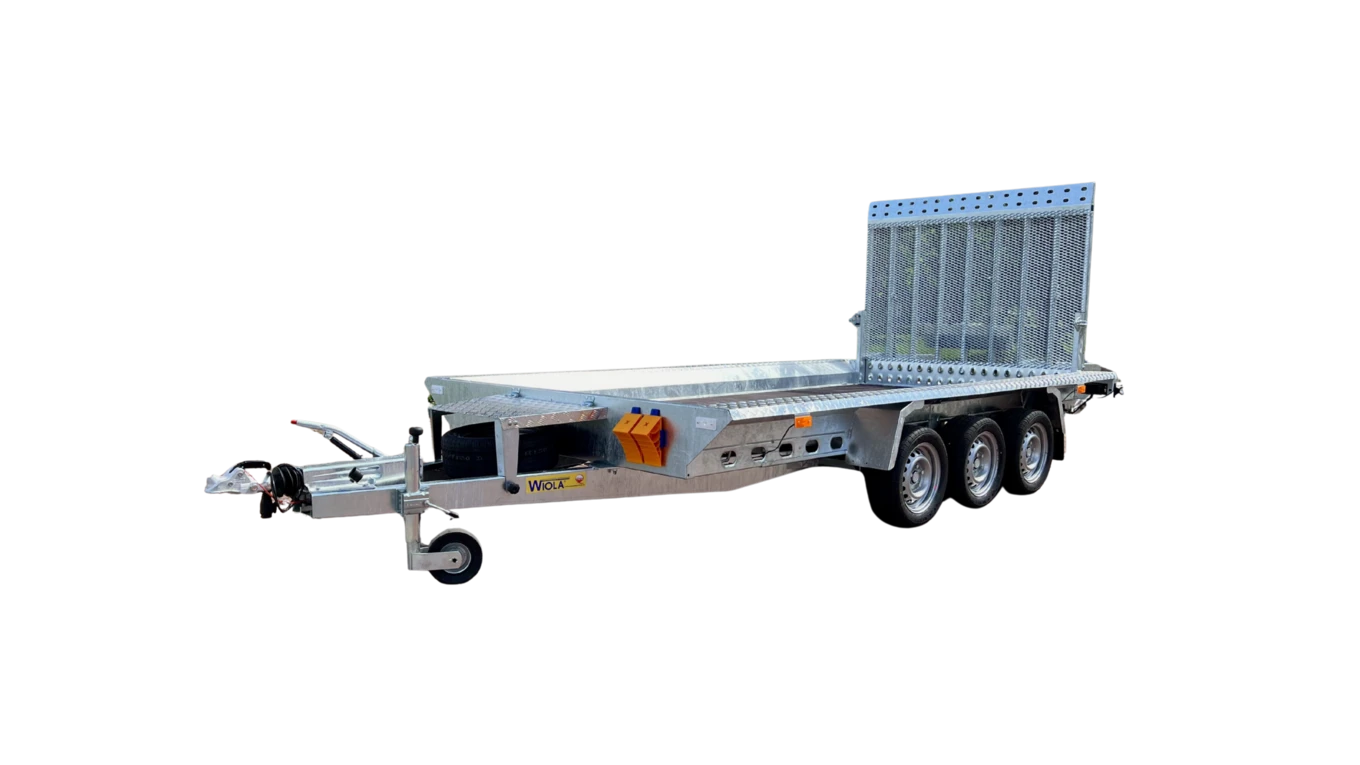
This is the second most popular category of car trailers. However, these products are designed to transport specific types of vehicles – after all, it would be difficult to transport a quad bike on a flatbed trailer :). They are available in braked and unbraked versions.
The most popular categories are:
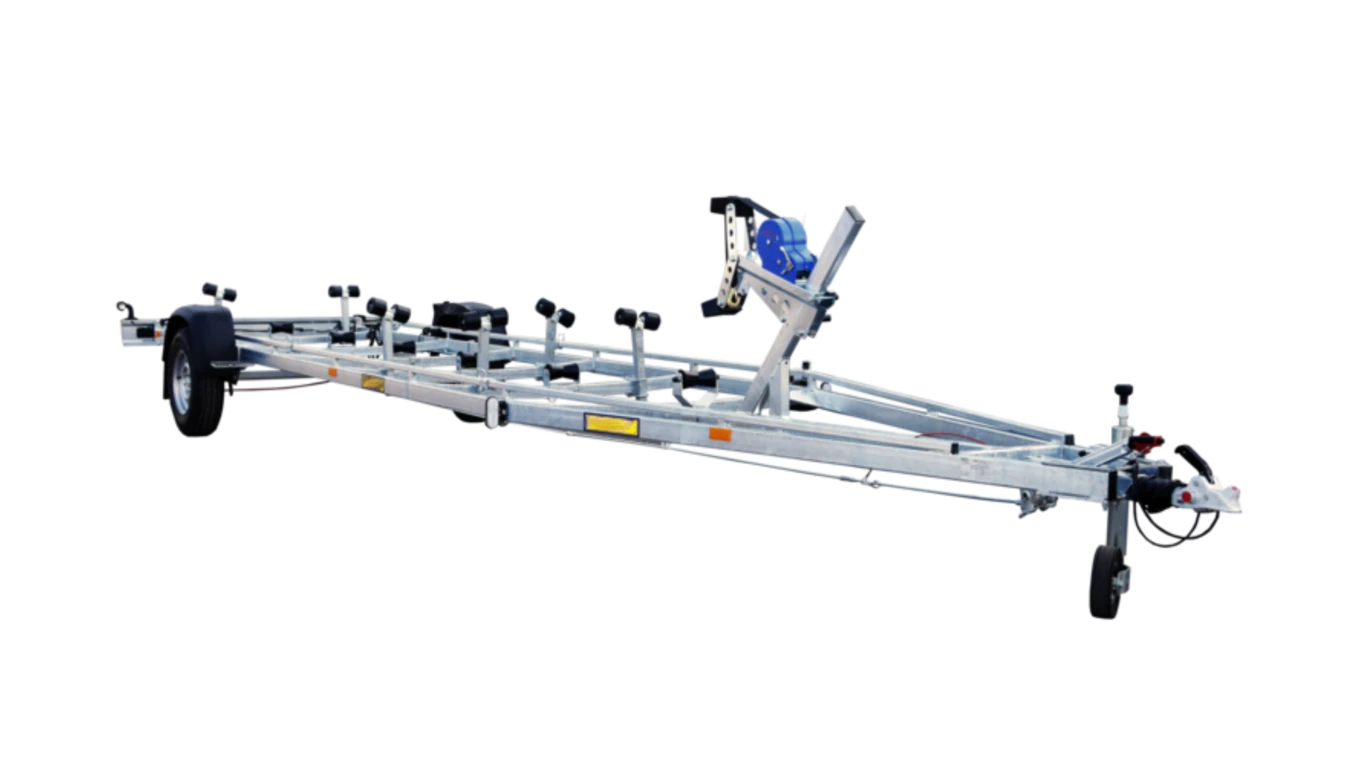
Boat trailers
Type of suspension
The most common types are steering axles, available in both unbraked and braked versions, manufactured by the German companies AL-KO and KNOTT. This type of suspension is virtually fault-free, and maintenance for unbraked axles is limited to replacing the bearings. Another advantage is the independent operation of the control arms – for example, if you hit a pothole or a bump in the road, the impact is absorbed by the rubber shafts inside the axle. Some manufacturers offer trailers with leaf spring suspension as an alternative to steering axles. In our view, this is an outdated solution whose heyday is long past – it was used in the 1980s and 1990s, when there were no other options on the market, and the suspension systems of vans such as the Żuk or Polonez were adapted for trailers.
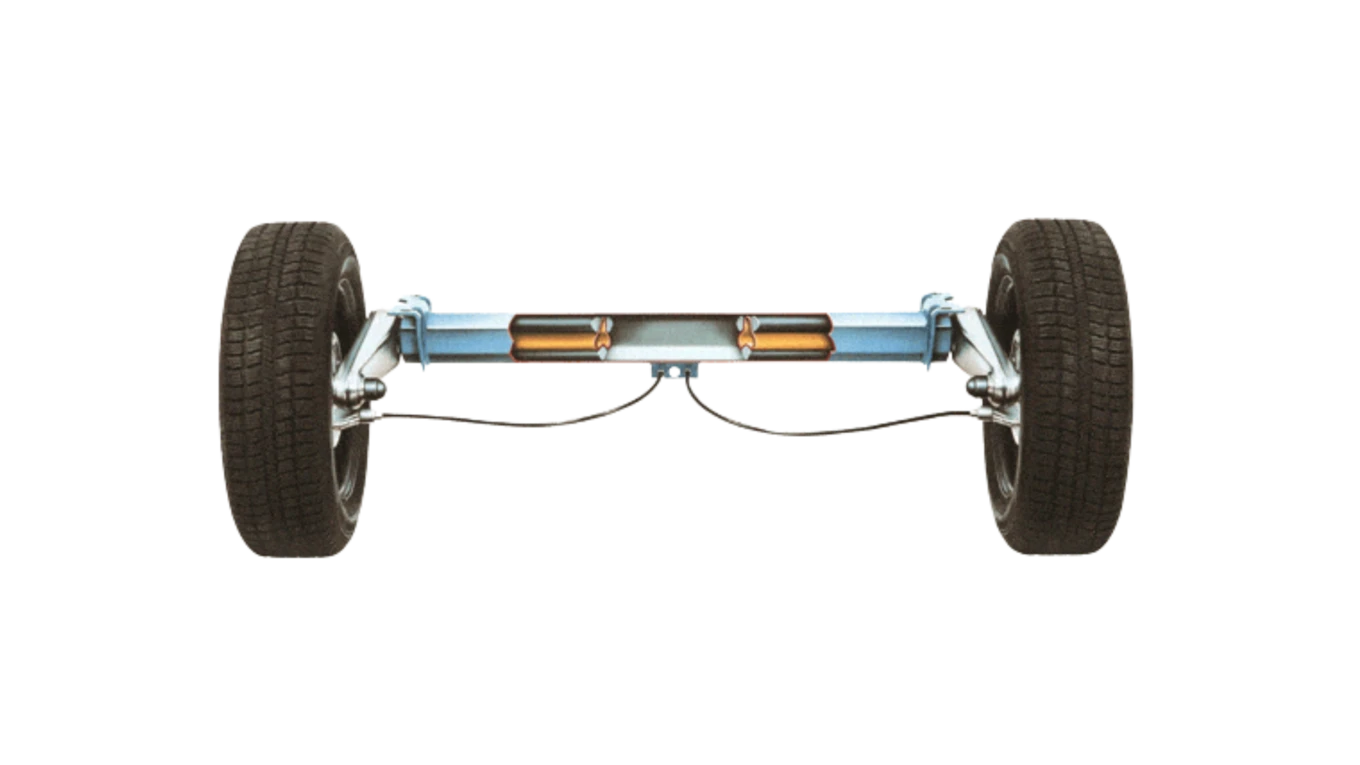
Wiola trailers are currently fitted with AL-KO axles featuring compact bearings.
Support frame
It is usually made of steel, using hollow sections or structural sections. In our opinion, this is the most important – and at the same time the most frequently overlooked by customers – part of the trailer. On the second-hand market, you can find many SAM-type trailers or cheap ‘supermarket’ models with broken frames that couldn’t withstand the load. Cracks most often appear where the axle is attached to the frame, so when buying, you need to check how sturdy the structure is at this point.
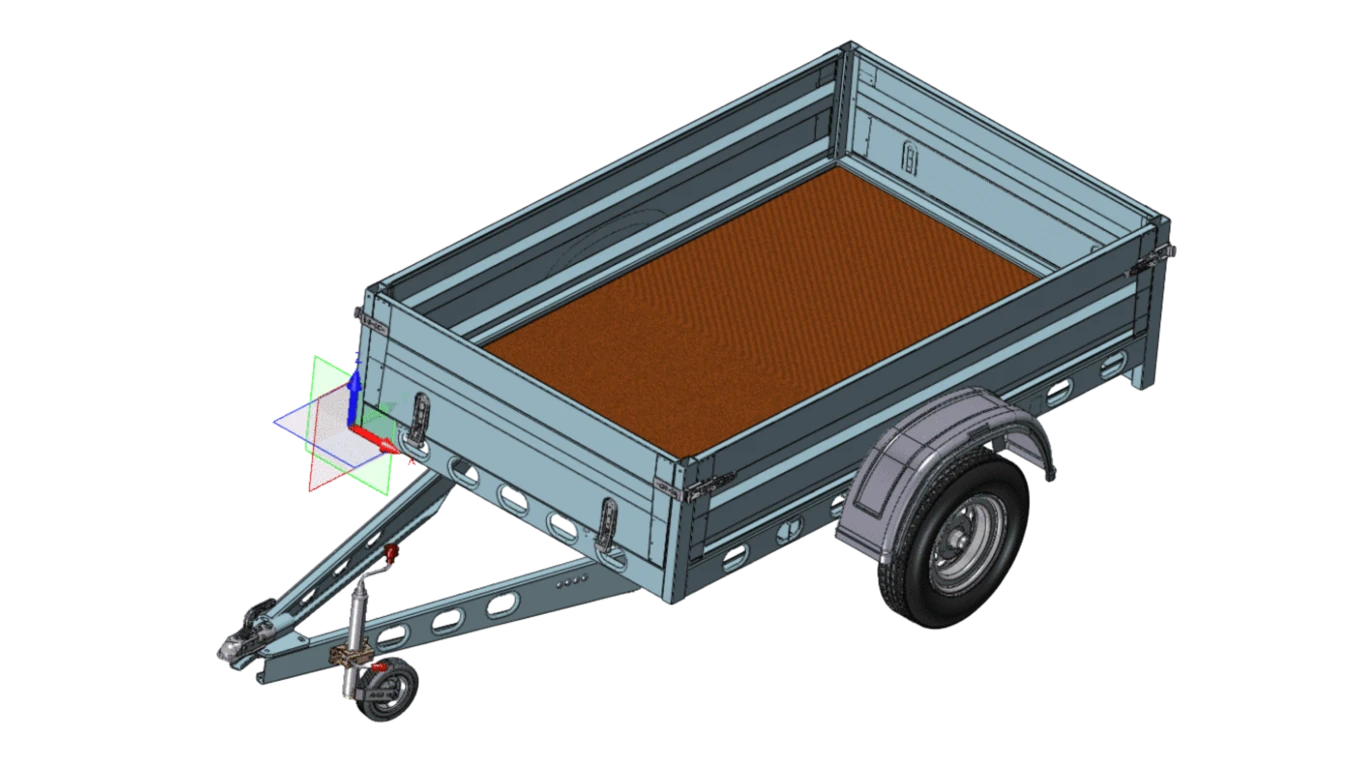
Since 2006, Wiola trailer frames have been manufactured from Swedish Domex 420 steel sections. These are additionally perforated and roll-formed. This significantly increases the strength and rigidity of the entire structure whilst reducing the trailer’s weight.
Lighting
Trailers do not have their own power supply, so they draw power from the car fitted with a socket. For light trailers (up to 750 kg), a 7-pin socket is sufficient, which duplicates the car’s position lights, indicators, brake lights and fog lights. Trailers with a gross vehicle weight exceeding 750 kg must also have a reversing light. This automatically necessitates the car having a 13-pin socket.
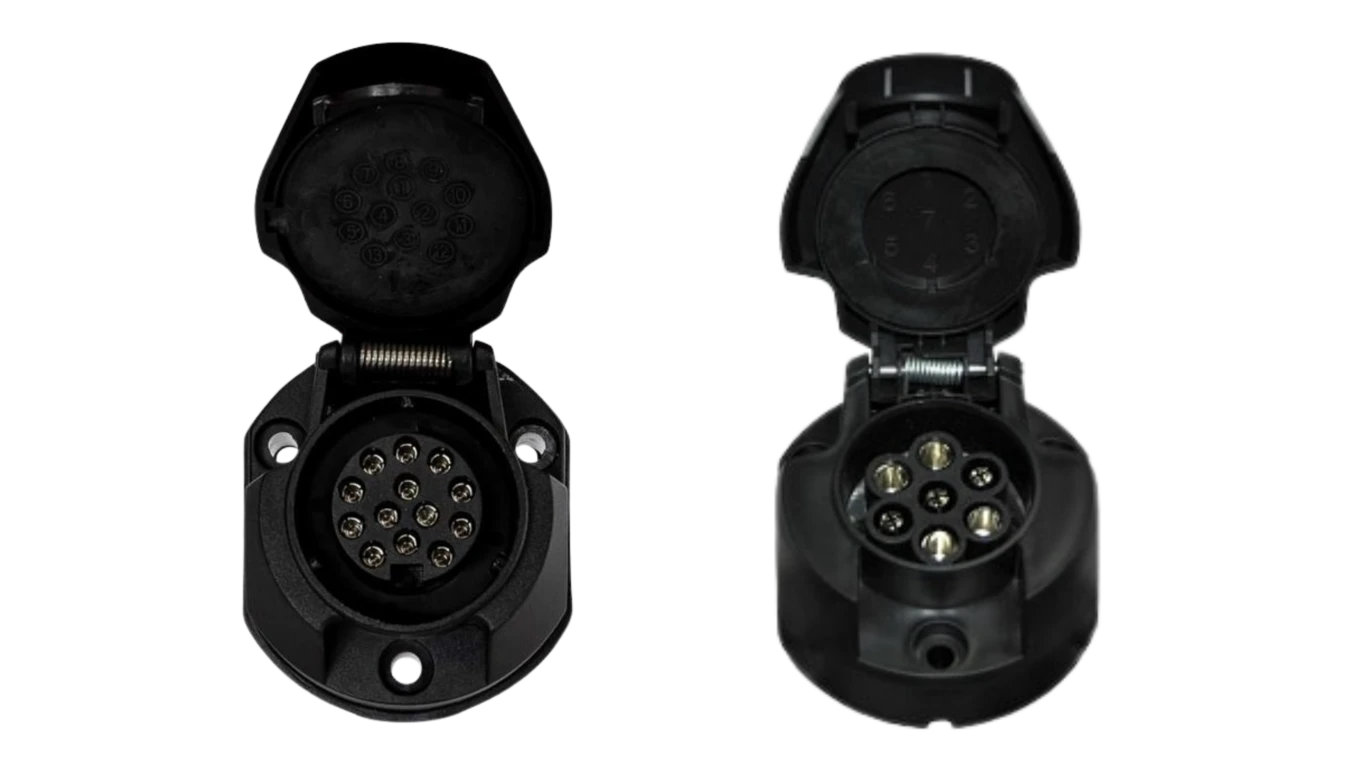
Adapters are available on the market to convert from 7 pins to 13 and from 13 to 7. Therefore, if you are wondering what electrical system to install in your car, a 13-pin socket is definitely the better choice.
Summary
As you can see, car trailers have evolved over the last dozen or so years. They are used not only for work but also for leisure purposes – for example, they allow you to transport a motorbike. In our opinion, it is definitely worth visiting your nearest dealer to buy a trailer. Unlike DIY stores, trailer dealers have a much better understanding of their products and offer a wide range of options.
Car trailer – how to choose a trailer for a passenger car?
A car trailer allows you to quickly increase your car’s transport capacity without having to buy a van. You can use it to transport building materials, furniture, tools, garden equipment, timber, machinery, motorbikes and many other types of load.
A well-chosen car trailer will come in handy both during home renovations and DIY projects, as well as in a business’s day-to-day operations. Before buying, however, you need to decide what dimensions the load bed should have, what load capacity you’ll need, and whether a single-axle, twin-axle, open or enclosed trailer would be best.
We’ll advise you on how to choose a car trailer and which specifications to look out for, so that your purchase meets your actual needs.
What can a car trailer be used for?
Car trailers have a very wide range of uses. They are most commonly used to transport:
- building and renovation materials,
- furniture and household appliances,
- tools and business equipment,
- timber, fuel and garden waste,
- garden equipment,
- sheets, profiles and longer items,
- motorbikes, quad bikes or machinery,
- goods requiring protection from the weather.
A versatile car trailer can be used occasionally, for example when moving house, or regularly as part of the equipment for a construction, gardening, installation or maintenance company. The most important thing is to determine what will be transported most frequently. One type of trailer will be suitable for bags of soil and grass clippings, whilst another will be better suited to building panels, power tools or heavy machinery.
A small car trailer or a large trailer?
The choice of size should depend primarily on the type of load, the storage space available and the vehicle’s capacity.
A small car trailer
A small car trailer is a good solution for homeowners, gardeners and those with allotments. It takes up very little space, is easy to move by hand and copes well on narrow driveways.
A compact car trailer is ideal for transporting:
- tools,
- bags of materials,
- garden waste,
- small items of furniture,
- leisure equipment,
- building supplies.
An example of a small goods trailer is a model with a load area of approximately 2040 × 1220 mm. This size already provides a practical transport area, whilst also making it easy to store the trailer in a garage or on your property.
A large car trailer
A large car trailer is designed for people who need to transport larger quantities of materials, long items or business equipment. The larger load bed makes it easier to transport panels, furniture, machinery, building materials and bulky goods.
Wiola’s range includes trailers with a load area measuring up to approximately 3020 × 1520 mm in popular light-duty models. A large car trailer can have one or two axles and a gross vehicle weight (GVW) tailored to the user’s needs.
However, it is important to remember that a large load compartment does not always mean a higher payload. With the same GVW, a heavier construction leaves fewer kilograms available for the goods being transported.
A single-axle or double-axle car trailer?
The number of axles affects the handling, kerb weight, manoeuvrability and behaviour of the trailer during loading.
Single-axle car trailer
A single-axle car trailer has one axle and two wheels. Colloquially, this type of trailer is sometimes referred to as a ‘two-wheeler’.
The main advantages of a single-axle trailer are:
- low kerb weight,
- good manoeuvrability,
- easy manual manoeuvring,
- easier storage,
- good payload capacity with a gross vehicle weight of 750 kg,
- lower purchase and running costs.
A single-axle car trailer is suitable for use at home, in the garden, on a plot of land and for the occasional transport of materials. It will also work well for a small business if a very large load area is not required.
Two-axle trailer
A twin-axle trailer, also known as a tandem trailer, has two axles positioned close together. It ensures stable handling and can be more convenient when transporting long or bulky loads.
Its advantages include:
- good road stability,
- less tilting during loading,
- a large load bed area,
- good weight distribution,
- comfort during regular use.
However, one must take into account the higher unladen weight and the fact that it is more difficult to manoeuvre by hand. In a twin-axle trailer with a capacity of up to 750 kg, the additional axle increases the weight of the structure, which is why the actual load capacity may be lower than in a comparable single-axle model.
A twin-axle trailer should not be confused with the term ‘two-wheeler’. A two-wheeler usually has one axle and two wheels, whereas a tandem trailer has two axles and four wheels.
750 kg car trailer – who is it best suited for?
A 750 kg car trailer falls into the category of light trailers. The figure of 750 kg refers to its maximum authorised mass, i.e. the maximum weight of the trailer together with its load.
For example, if the trailer’s unladen weight is 200 kg, a maximum of 550 kg remains for the load. For this reason, when comparing models, you should check not only the maximum authorised mass, but also the unladen weight and the maximum payload.
A car trailer with a load capacity of up to 750 kg is particularly suitable for:
- for jobs around the house,
- during renovation work,
- for transporting gardening equipment,
- for allotment holders,
- in small service businesses, for the occasional transport of furniture and materials,
- for drivers looking for a versatile trailer.
A light trailer can be registered with a maximum authorised mass (MAM) of less than 750 kg if required by the vehicle or the intended use. The exact range of available values depends on the specific model and its type approval.
If heavy materials, machinery or larger quantities of goods are to be transported regularly, a braked trailer with a maximum authorised mass exceeding 750 kg may be a better option.
Car trailer – what size should you choose?
Anyone searching for information under the heading ‘car trailer dimensions’ should pay attention to two different parameters:
- the overall dimensions of the trailer,
- the internal dimensions of the load compartment.
When planning transport, the length and width of the load compartment are the most important factors. The external dimensions, on the other hand, are important when garaging, parking and manoeuvring.
Common load compartment sizes for Wiola trailers include, amongst others:
- approximately 2040 × 1220 mm,
- approximately 2420 × 1320 mm,
- approximately 2720 × 1320 mm,
- approximately 2920 × 1420 mm,
- approximately 3020 × 1520 mm.
A smaller trailer is sufficient for transporting tools, sacks, garden equipment and small items of furniture. A longer trailer will be more convenient for transporting panels, profiles, planks, doors or company equipment.
Before buying, it is worth measuring the largest items that will be transported regularly. You should also take into account the space needed to secure them properly.
Trailer load capacity versus its unladen weight
Two trailers with a maximum authorised mass (MAM) of 750 kg may have different load capacities. The lighter model will allow you to legally carry more, whilst the heavier and more elaborate design may offer more space or a wider range of features.
The permissible payload can be calculated using a simple formula:
payload = trailer’s maximum authorised mass – trailer’s unladen weight
The load weight must include all items being transported as well as any additional items placed on the trailer. Exceeding the maximum authorised mass is not permitted, even if the trailer’s construction appears to be sufficiently robust.
When making your choice, it is therefore worth striking a balance between:
- the dimensions of the load bed,
- the unladen weight,
- payload,
- equipment,
- and structural strength.
An open trailer or a closed car trailer?
A standard flatbed trailer is versatile and allows for quick loading from several sides. It can be used to transport building materials, timber, garden equipment, furniture and machinery.
If the load requires protection, a lockable car trailer is a better option. Depending on your needs, this could be:
- a flat-top trailer,
- a trailer with a tarpaulin and frame,
- a trailer with a high body,
- a container or box trailer.
The flat cover provides good protection for low-profile items and allows the load area to be sealed off. A tarpaulin with a frame increases capacity and protects goods from rain, snow and dirt.
A container trailer has a rigid body. It is ideal for transporting tools, company equipment and valuable items requiring greater protection.
When choosing a lockable trailer, bear in mind that the cover, frame or body increase the unladen weight and may therefore reduce the available payload.
What should you look out for when assessing the construction of a trailer?
A car trailer should be suitable not only for the weight of the load being carried, but also for the frequency of use and operating conditions.
Frame
The frame is the primary load-bearing component. It should be adequately reinforced, protected against corrosion and designed to withstand the loads encountered whilst riding.
It is worth checking how the frame, drawbar and axle are joined. The areas subject to the greatest stress are particularly important.
Corrosion protection
The trailer is exposed to water, road salt, mud and mechanical damage all year round. Effective protection of the steel components against corrosion contributes to the durability of the entire structure.
Wiola trailers utilise, amongst other things, hot-dip galvanising, which protects steel components both on the outside and in hard-to-reach areas.
Floor
The floor should be resistant to moisture, abrasion and the weight of the items being transported. Waterproof, non-slip plywood is often used in goods trailers.
For heavy-duty use, it is worth considering a thicker floor and additional cross-bracing.
Sides
The opening rear side panel makes loading easier. The option to open or remove the front side panel is useful when transporting longer items.
The trailer can also be fitted with side panel extensions, which increase the height of the load area. This is particularly useful when transporting leaves, branches, light materials and garden waste.
Load-securing brackets
The load must be properly secured to prevent it from shifting. It is therefore advisable to choose a trailer with sturdy mounting points for lashing straps, ideally integrated into the frame.
Axle and suspension
Steering axles with rubber suspension elements are often used in car trailers. They ensure independent wheel operation and do not require extensive maintenance.
For higher gross vehicle weights or frequent use, it is worth considering a braked axle with an overrun brake.
How do you match a trailer to a car?
Not every car trailer can be towed by every car. Before purchasing, you should check the car’s registration certificate, paying particular attention to the following fields:
- O.1 – maximum gross weight of a braked trailer,
- O.2 – maximum gross weight of a trailer without brakes,
- F.2 – the vehicle’s maximum permissible mass.
You must also take into account the driver’s licence category and the maximum authorised mass of the combination.
A Category B driving licence allows you, amongst other things, to tow a light trailer with a maximum authorised mass (MAM) of up to 750 kg. For heavier trailers, depending on the MAM of the car and the entire combination, additional qualifications – code 96 or Category B+E – may be required.
Before choosing a specific model, it is worth reading a separate guide explaining how to match the trailer’s maximum authorised mass to your car.
Car trailers – what determines the price?
The price of a car trailer depends on its size, design and specifications. The final price is primarily influenced by:
- the length and width of the load bed,
- the number of axles,
- unladen weight and gross vehicle weight,
- the use of an overrun brake,
- the type of side panels,
- floor thickness,
- method of anti-corrosion protection,
- type of wheels and tyres,
- tarpaulin, cover or bodywork,
- additional equipment.
A small single-axle car trailer will usually be cheaper than a large twin-axle model or a braked trailer. However, it is not worth choosing solely on the basis of the lowest price. A trailer that is too small, unsuitable or poorly made may quickly prove to be inadequate.
It is best to compare complete set-ups, taking into account the equipment you will actually be using.
A new or second-hand car trailer?
The new car trailer allows you to choose the dimensions, gross vehicle weight rating and equipment to suit your specific needs. The buyer receives the documents required for registration and a warranty in accordance with the manufacturer’s terms and conditions.
Selected Wiola models may be covered by a five-year warranty, provided the requirements set out in the warranty terms and conditions are met.
When buying a second-hand trailer, you must check the following particularly carefully:
- the condition of the frame and drawbar,
- signs of corrosion or cracks,
- the axle mountings,
- the condition of the coupling,
- the operation of the overrun brake,
- bearings and tyres,
- the floor and side panels,
- electrical system,
- whether the VIN matches the documents.
In the case of intensive commercial use, the ability to configure a new trailer for a specific application may be more important than the lower price of a second-hand model.
Which car trailer should I choose?
You can simplify your choice by considering the intended use:
- home, garden and allotment – a small single-axle car trailer,
- renovation and building materials – a 750 kg trailer with a suitably large load bed,
- panels, planks and long items – a longer trailer with opening front and rear sides,
- regular business use – a reinforced single- or twin-axle trailer,
- goods requiring protection – a lockable car trailer or one with a tarpaulin,
- heavy machinery and materials – a braked trailer with a higher gross vehicle weight rating,
- large but relatively light loads – a large car trailer with a low unladen weight
Before placing an order, it’s worth asking yourself a few questions:
- What will be transported most often?
- What are the dimensions of the largest load?
- How many kilograms will need to be transported?
- Will the trailer be used occasionally or on a daily basis?
- Where will it be stored?
- Is a tarpaulin, cover or bodywork required?
- What is the maximum authorised mass (MAM) of the trailer that the car can tow?
- Is easy manoeuvrability more important, or a large load area?
Summary
The most versatile choice for domestic use and occasional transport is usually a 750 kg single-axle car trailer. It is manoeuvrable, relatively light and easy to store.
Those transporting larger items should consider a model with a longer and wider load bed. For regular business use, a large car trailer, a twin-axle trailer or a braked version with a higher gross vehicle weight rating may be a good option.
If the tools or goods being transported need to be protected from the weather and unauthorised access, it is worth choosing a trailer with a cover, a tarpaulin or a rigid body.
Wiola’s range includes car trailers in various sizes, with different numbers of axles and a range of equipment options. Thanks to the customisation options, you can tailor the trailer to suit both a passenger car and specific private or professional applications.
Frequently Asked Questions
Which car trailer is best?
For occasional transport, a single-axle trailer with a load capacity of up to 750 kg is usually sufficient. For heavier or longer loads, a model with a larger load bed or a twin-axle trailer may be a better option.
Does a 750 kg car trailer have to have a brake?
Light trailers weighing up to 750 kg are available in both unbraked and braked versions. The type of trailer you can tow depends on the vehicle’s specifications as stated in the registration certificate.
What should the dimensions of a small car trailer be?
For jobs around the house, a load area approximately 2000–2500 mm long and 1200–1300 mm wide is often sufficient. The final size should be chosen to suit the items you transport most frequently.
Can a large car trailer have a maximum authorised mass of 750 kg?
Yes. A large trailer can have an extended load bed and still fall into the light trailer category. However, you need to check its unladen weight, as this affects the available payload.
A single-axle car trailer or a tandem trailer?
The single-axle model is lighter and easier to manoeuvre. The tandem model offers stable handling and a large contact area, but has a higher kerb weight and is more difficult to move by hand.
What does the term ‘car tricycle’ mean?
This is the colloquial name for a small car trailer with a single axle and two wheels. It is not a separate technical category of trailer.
Is it worth buying a lockable car trailer?
Yes, if you are transporting tools, company equipment or goods that need to be protected from rain and dirt. You can choose a cover, a tarpaulin or a rigid container body.
What determines the price of a car trailer?
The price is influenced by the dimensions, the number of axles, the maximum authorised mass (MAM), the type of chassis and side panels, the overrun brake, and optional extras such as a cover, tarpaulin, spare wheel or support legs.
 32 232 19 65
  biuro@przyczepy-wiola.eu